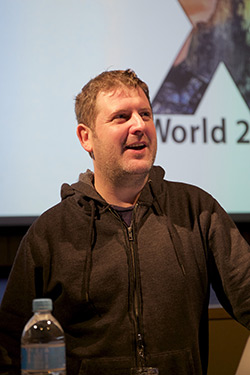
Automating Boot Camp Installation

Craig Richardson, Macquarie UniversityPart of XW15

This presentation will examine and demonstrate the tools and configuration we’re utilising for automating the deployment of Windows 8.1 to each of our 200 Mac computers.

Firstly it will explore why our centre needs to use Boot Camp to run Windows instead of deploying via popular virtualisation platforms such as VMWare Fusion or Parallels Desktop.

It will then examine how we’ve prepared the Windows out-of-box experience (OOBE) for Microsoft Sysprep. In particular it’ll pay attention to configuration unique for Windows setup on Mac hardware.

Lastly we’ll examine our use of a commercial tool (Winclone) to create Apple Software packages (.pkg files) that we use to deploy Windows remotely via tools such as Apple Remote Desktop.

This session is for anyone who needs to install Windows via Boot Camp onto a large number of Macintosh computers.
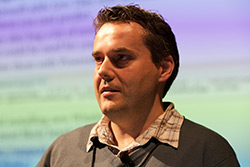


Craig RichardsonCraig is the Systems Analyst at the ARC Centre of Excellence in Cognition and its Disorders at Macquarie University.

He is responsible for the management of the server and desktop infrastructure of the research centre compromising approximately 200 dual boot Macintosh desktops and laptops as well as our Xsan storage solution. He is also responsible for the centre’s website and research laboratories.


  9.1 MB

Offer The Whopper – Providing Excellent Customer Service to Mac Users

Peter Wells, UNSW AustraliaPart of XW15

Providing excellent Mac support is as much about knowing who your Mac customers are, and how they differ to the typical PC user, than it is knowing how to ssh into a server.

Excellent Mac support requires a little more flexibility, and a lot more talking to the customer, and each other. It’s about offering advice as much as support. About knowing what works, and what doesn’t, in the Mac space. Sometimes the best support is to honestly admit the Mac’s shortcomings, and working around that.

My discussion will focus on how UNSW Australia has changed its focus with Mac customers from a rigid, locked down SOE environment with networked accounts, to a more open MOE environment, with local accounts, admin rights for the users, etc. I’ll discuss how this has resulted in much happier Mac users, and how we’ve grown the MOE to more departments within the university.


Peter WellsI’ve been working with UNSW IT for the last 3 years, developing the SOE and working with our two main Mac areas – Faculty of Arts and the School of Art and Design – to design a SOE that gets out of the way of the user as much as possible, given a close to retail experience.
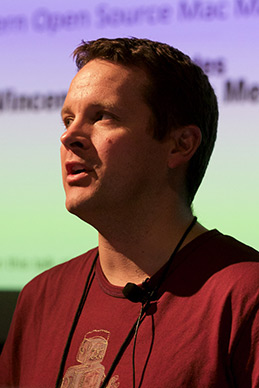
I’m an Apple Certified Technical Co-ordinator andTrainer (10.6, 10.7) with over 10 years experience building, supporting, and deploying desktop images to Apple computers in many environments. I complement my technical knowledge with excellent interpersonal skills thanks to many years of working in customer service roles.

From 2009-2011 I was contracting with Key Options Technology, providing on site and remote support to over 30 clients, from large Architecture firms, Television production companies, schools and smaller media agencies, via Remote Desktop and VPN. I was also sub-contracted to UNSW Australia and Screen Australia during this time, until I was offered the Sales and Training Co-ordinator role.

In that role, I became an Apple Certified Trainer in Support Essentials and Server Essentials, and working closely with our Business Development Manger to design proposals for new clients. Working directly with Apple Australia, I also wrote a course on iOS Deployment Strategies.

Personally, I’ve ran Australia’s largest Apple Community, mactalk.com.au for a number of years. I’ve been interviewed by the SMH and The ABC as an Apple consultant, and have spoken at conferences as diverse as Ad:Tech Sydney, SxSW, Swipe, OneMoreThing and the AUC’s /dev/world.


  12 MB

Modern Open Source Mac Management

Jon Rhoades, St Vincent’s InstitutePart of XW15

Open source Mac Management tools have matured to the point where they are nearly on par with commercial/Apple offerings (and in a few case superior!). This talk showcases open source tools from deployment to installation to inventorying – with a close look at profile management.


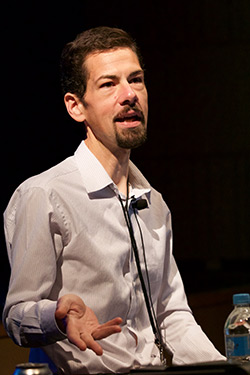
Jon RhoadesJon is an Senior IT Officer at St Vincent’s Institute. He currently manages the service lifecycle of a fleet of Macs – both deployment and ongoing support.

  6.9 MB

iBeacons – The Coolest Apple Technology You’ve Never Heard Of

Paul Cowan, University of WaikatoPart of XW15

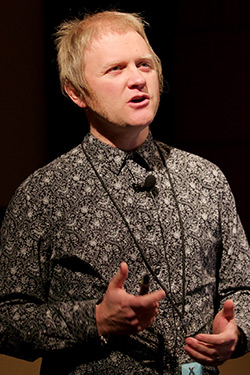
The iBeacon specification is Apple’s official Bluetooth 4.0LE implementation for providing location based services and notifications to apps and web services on iOS and OS X. There are some interesting potential classroom and teaching applications for this technology, most of which we’ve only just begun to explore. In this presentation Paul Cowan, the Innovation & Technology Team Manager from the University of Waikato, will explain the underlying architecture of iBeacons, and then take you through some interesting examples and experiments designed to explore how they might best be used.


Paul CowanPaul is an Educational Technology expert and IT Team Manager for the University of Waikato, working for the Faculty of Education where he supervises the technology team. His role in the Faculty obliges him to innovate with consumer and IT technologies with a view to discovering their applications in education and teaching. His current primary focus is in the fields of podcasting, eBooks, mobile devices and collaborative learning spaces.

  2.8 MB

Apple IDs and the New Golden Triangle

Marcus Ransom, RMIT UniversityPart of XW15

Apple IDs pose many challenges to traditional ITS models in Enterprise and Education. This presentation will look at the different kinds of Apple IDs and how they are intended to be integrated into Apple’s deployment solutions and online systems such as VPP, DEP, GSX, Family Sharing and so on. These offerings from Apple have also changed the landscape for provisioning and managing devices away from the traditional “Golden Triangle” of binding to both Active and Open Directory. We will look at how the Apple ID fits into the new methodologies and some strategies that will help provide the best possible user experience.


Marcus RansomMarcus has been integrating Apple devices into various enterprise environments for over a decade, from small design studios through to one to one iPad programs. In his current role as the Lead Apple Technician at RMIT University, he is responsible for the integration and support of the Apple fleet into the wider University. Understanding the changing Apple ecosystem and developing a community amongst Apple system administrators are two objectives that motivate him to improve the way Apple devices are supported and perceived in the wider IT environment.


  2.3 MB

Charming The Snake – Python and IPython for System Administration

Tony Williams, Computers NowPart of XW15

System administration often encompasses repetitive tasks that formerly we used to write a shell script for. With the development of modern scripting languages why settle for writing bash scripts?

This workshop will give you a grounding in Python, shows you the interactive IPython and the benefits of a modern language, including improved language flexibility, debugging and third party libraries. It will cover topics such as gathering system information, reading and writing plist preference files, searching an Active Directory server and gathering reports from a Casper JAMF Software Server.


Tony is currently an integration engineer at CompNow where he is responsible for the design, installation and support of a disparate range of systems, mostly Macs and iPads. With over thirty years in the industry he has had a myriad of roles including C programmer, Unix system administrator, IT Manager, support specialist and Associate Editor of Australian Macworld.


For Grief: A photographic social documentary of funeral directors and their experiences

Yoko Lance, Queensland College of Art Part of CW15

In many developed countries, death and funerals are often considered a taboo subject which people avoid talking about. “Death” and “dead” are often rephrased as “loss”, “gone” or “passed away”, and “the deceased” or “remains” are used instead of “dead body” and “corpse”. The concept of death is carefully sanitised in our society and we often deny death. This denial can lead to stigmatisation of people who work in the funeral industry because they handle dead bodies and appear to profit from death and grief. Utilising digital still-photography and video interviews, a qualitative photographic field study was conducted with three funeral directors in Queensland, Australia in 2013. The project undertook an investigation of their work and private time to determine whether funeral directors are stigmatised in today’s sanitised society. The research showed that the funeral directors have experienced stigmatisation directly related to their occupation, however this stigma has waned as their role in the industry becomes established. The project revealed that over time, this stigma becomes less concerning to Funeral Directors who instead focus on the process of burial and funerary arrangements. Interviews with Funeral Directors reveal rarely discussed side-effects of dealing with their own grief affected by depressing facts of death.


The Spatial and Temporal Poetics of Webcam Viewing

Alannah Gunter, Queensland College of Art Part of CW15

This paper will explore the aesthetics of the pixelated scenes relayed across the globe by streaming webcams. It will examine the mesmerising and transportative powers that these shimmering pixels possess – what is it that makes them poetic, and how does this differ from other types of vicarious travel? It will investigate the ways in which our experience of temporal and spatial relationships shift – how our perception of place undergoes a transformation as the line between ‘here’ and ‘there’ becomes blurred and suggest that a new digital and vicarious aesthetic has evolved to exist within the wider context of travel imagery.


Audiovisual Installation as Ecological Performativity

Teresa Connors, University of Waikato Part of CW15

The motivation behind this paper stems from my practice as a composer and my research as a PhD candidate at the University of Waikato. The majority of artifacts that result from this research are audiovisual installations that explore new relationships from an ecological perspective. In this context, the term ecological refers to the philosophical school of thought that believes the world to be a network of interconnected and interdependent phenomena. In an attempt to contextualize my research and explore new possibilities for creative practice, I have become interested in a number of theories and lines of thought. These include Humberto Maturana and Francisco Varela’s Santiago Theory of Cognition, Andrew Pickering’s Dance of Agency, Karen Barad’s notion of Intra- Action, Jane Bennett’s idea of Thing-Power, and Timothy Morton’s Hyperobject. This paper presents these theories in the context of a creative practice that aims to engage with ontological considerations of interconnectedness. It investigates the interrelationships between living and non- living systems as process and structure, and their artistic potential for an empathic discourse by extending our human identity to include the larger biosphere.


Opera Composition and Performance Utilising Computer-Based Recording Technologies and Virtual Instruments: A Case Study

Eve Klein, University of New England Part of CW15

Classical music has resisted incorporating music technologies into compositional practices, in part because technology allows greater access to the techniques and timbres associated with virtuosic human acoustic performance. However, classical music composition and production can be enabled by music technologies, and they offer an effective vehicle for women to test and occupy the role of composer, performer and producer. This paper outlines how home-studio music production technologies were used to compose and stage The Pomegranate Cycle (2010, 2013). The Pomegranate Cycle was composed, recorded, performed and produced by a female opera singer using consumer-level recording technologies. This self-directed methodology is unique in opera, providing a model for other singer-composers.